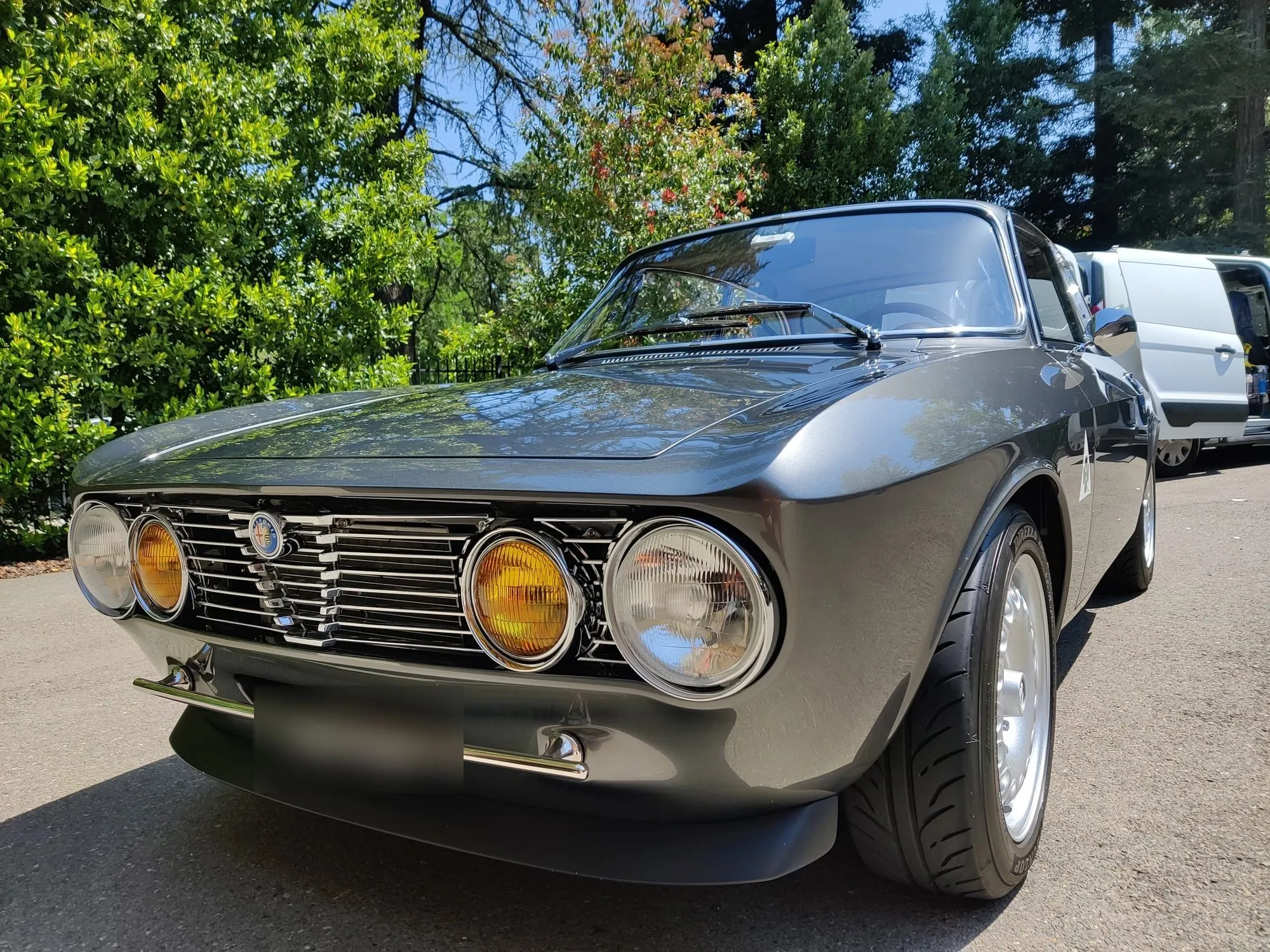
Classic Alfa Romeo GTV with restored chrome and clear headlights

Folsom  /  Headlight Restoration

Headlight Restoration
in Folsom, CA

Yellow, foggy headlights make a car look older and light the road worse at night. We sand, polish and protect the lenses so they’re clear again, as a $75 add-on to any detail.

Why headlights turn yellow

Most modern headlights are made of plastic, not glass. From the factory, they have a thin clear coat that protects them from the sun. Over the years, UV light breaks that coat down. The surface turns hazy, then yellow, and sometimes starts to crack or peel.

Road grit and car washes add tiny scratches on top. The result is a cloudy lens that scatters light instead of sending it down the road.

You’ll usually notice it in stages. First the lenses look a little dull next to the paint. Then a yellow cast shows up, often worse on the top of the lens where the sun hits most. Later the surface may look frosted or start to flake.

It’s about safety, not just looks

Cloudy lenses let less light through and spread it in the wrong places. That means you see less of the road at night, and oncoming drivers may get more glare.

If you drive Highway 50 in the dark, or the winding roads out toward the American River Canyon, you know how much good lighting matters. Clear lenses help your headlights do their job.

They also make a big difference in how the car looks. Cloudy lights can make a well-kept car look tired. Clear ones make the front end look newer.

Winter adds to it. Rain, fog and early sunsets mean more driving in the dark from November through February. That’s when foggy lenses are most noticeable, and when clear ones help the most.

Dim, yellow lights can also catch attention at a safety inspection or when a buyer looks over a used car. Clear lenses are a small fix that removes a common objection.

Classic Alfa Romeo GTV with restored chrome and clear headlights

Classic Alfa Romeo GTV with clear headlights and bright chrome.

Our process

Five steps to clear lenses.

Clear lenses aren’t just nicer to look at. You see more of the road.

01

Mask

We tape off the paint and trim so only the lens gets sanded.

02

Sand off the damage

Wet sanding removes the yellow, failing outer layer.

03

Refine

Finer and finer sanding steps smooth the surface for polishing.

04

Polish

A machine polish brings the lens back to clear.

05

Protect

A protective layer goes on to help slow down future yellowing.

What headlight restoration includes

We do the work by hand and machine, step by step:

  • Masking the paint and trim around each headlight
  • Wet sanding to remove the yellowed, failing layer
  • Finer sanding steps to smooth out the sanding marks
  • Machine polishing to bring back clarity
  • A protective layer to help keep the sun off the lens

What it can and can’t fix

Restoration works on the outside of the lens. It removes haze, yellowing and light scratches, and most lenses come out much clearer.

It can’t fix moisture or fog trapped inside the housing, a cracked lens, or a burned-out bulb. Very deep pits from years of rocks may soften but not go away. If a headlight is broken or full of water, it needs to be repaired or replaced, and we’ll tell you that up front.

Restoration also doesn’t last forever. The sun will slowly work on the lens again, so think of it as a reset that you can repeat when the haze returns.

Folsom sun is hard on headlights

Folsom summers often pass 100°F, and the sun is strong most of the year. Cars parked outside all day, at work or in a driveway, take that UV straight on the headlights. That’s why yellow lenses show up even on cars that are only a few years old.

Restored lenses last longest when they’re kept clean and protected. Parking in the shade or a garage helps. Regular washes and a fresh layer of protection now and then help keep the yellow from coming back as fast.

Restore or replace?

New headlight assemblies can be expensive, especially on newer cars with LED or adaptive lights. When the only problem is a hazy, yellow outer surface, restoration is usually the simpler and far cheaper fix.

Replacement makes more sense when a housing is cracked, a mounting tab is broken, or water keeps getting inside. If we see any of those, we’ll tell you before we start, so you don’t pay to restore a light that needs to be replaced anyway.

Headlight restoration is a $75 add-on, so most people pair it with a wash or full detail. That way the clear lenses match the clean paint, and the whole front of the car looks finished.

Pricing

Headlight Restoration prices

Headlight restoration is a $75 add-on; it covers the outside of the lenses, and broken or water-filled headlights need repair instead.

Sedan pricing. SUVs, trucks and larger vehicles are priced by size; custom jobs are quoted.

Book online

Book headlight restoration in Folsom

We come to you anywhere in Folsom, El Dorado Hills, Granite Bay, Orangevale and nearby. Open 7 days, 6 AM – 11 PM.

FAQ

Headlight Restoration questions

How long does restoration last?

It depends on sun and care. With a protective layer, regular washing and some shade, restored lenses stay clear much longer than a quick polish alone.

Can you fix fog inside the headlight?

No. Moisture inside the housing usually means a seal has failed. That needs a repair or a new headlight, not restoration.

Do I need a full detail to get headlight restoration?

It’s offered as a $75 add-on to a detail. Pairing it with an exterior wash also means the whole front end looks finished.

Will my headlights look brand new?

Most come out much clearer. Very old lenses with deep pitting or cracks may improve but not look new.

How long does it take?

It’s done during your detail visit, so it doesn’t need a separate appointment. We’ll include the time in your estimate.

Call (916) 776-8778Book online