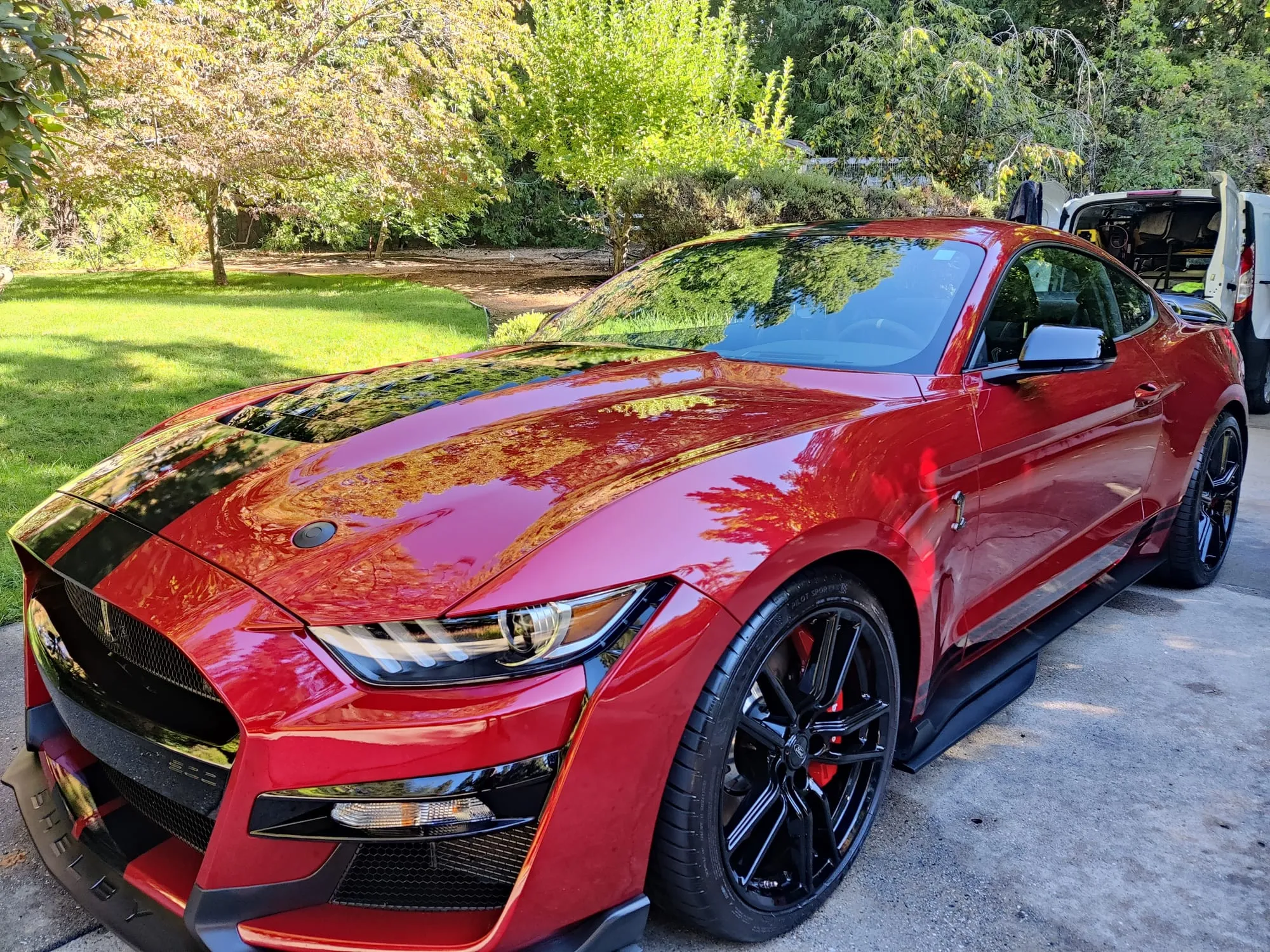
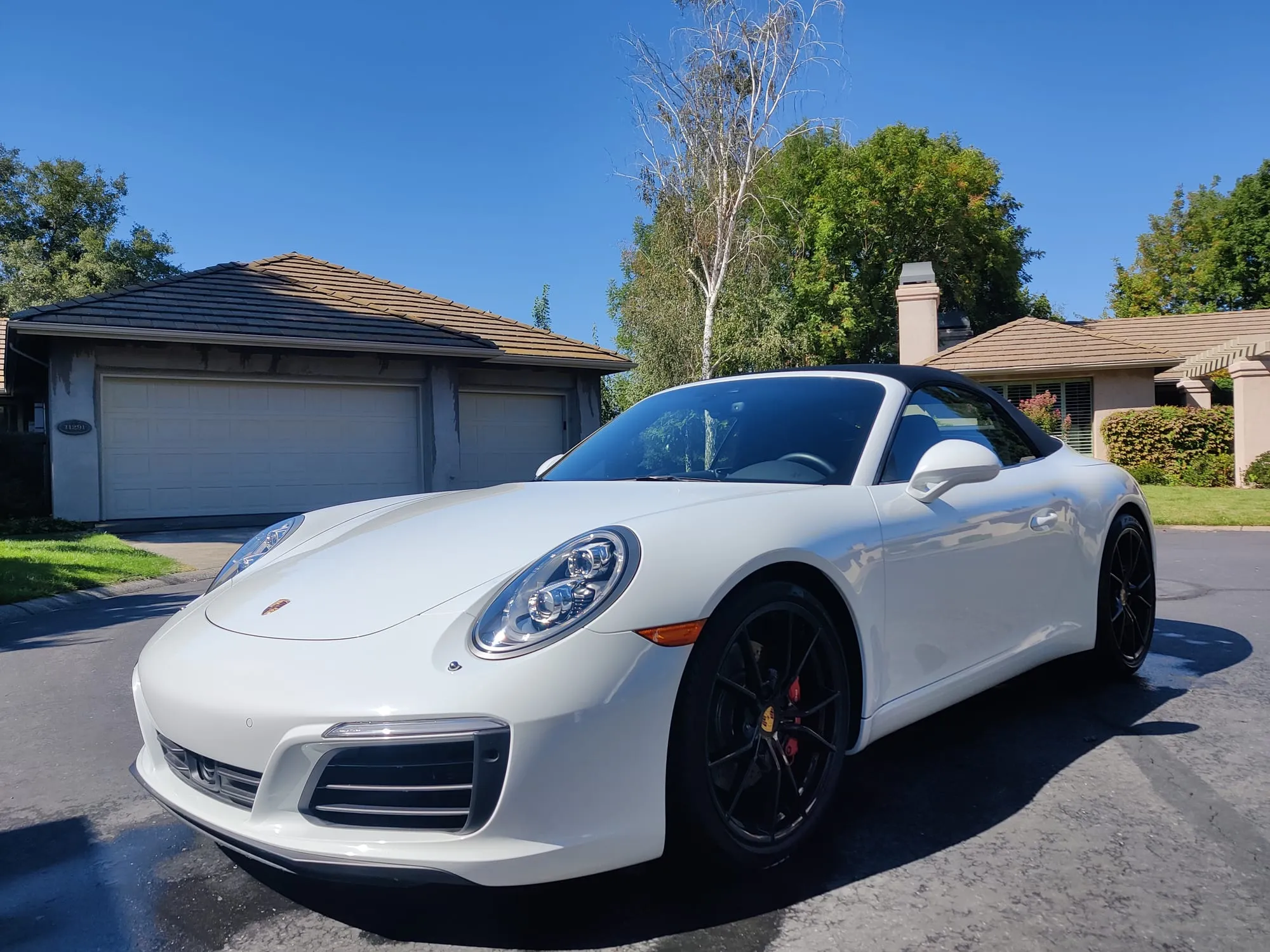
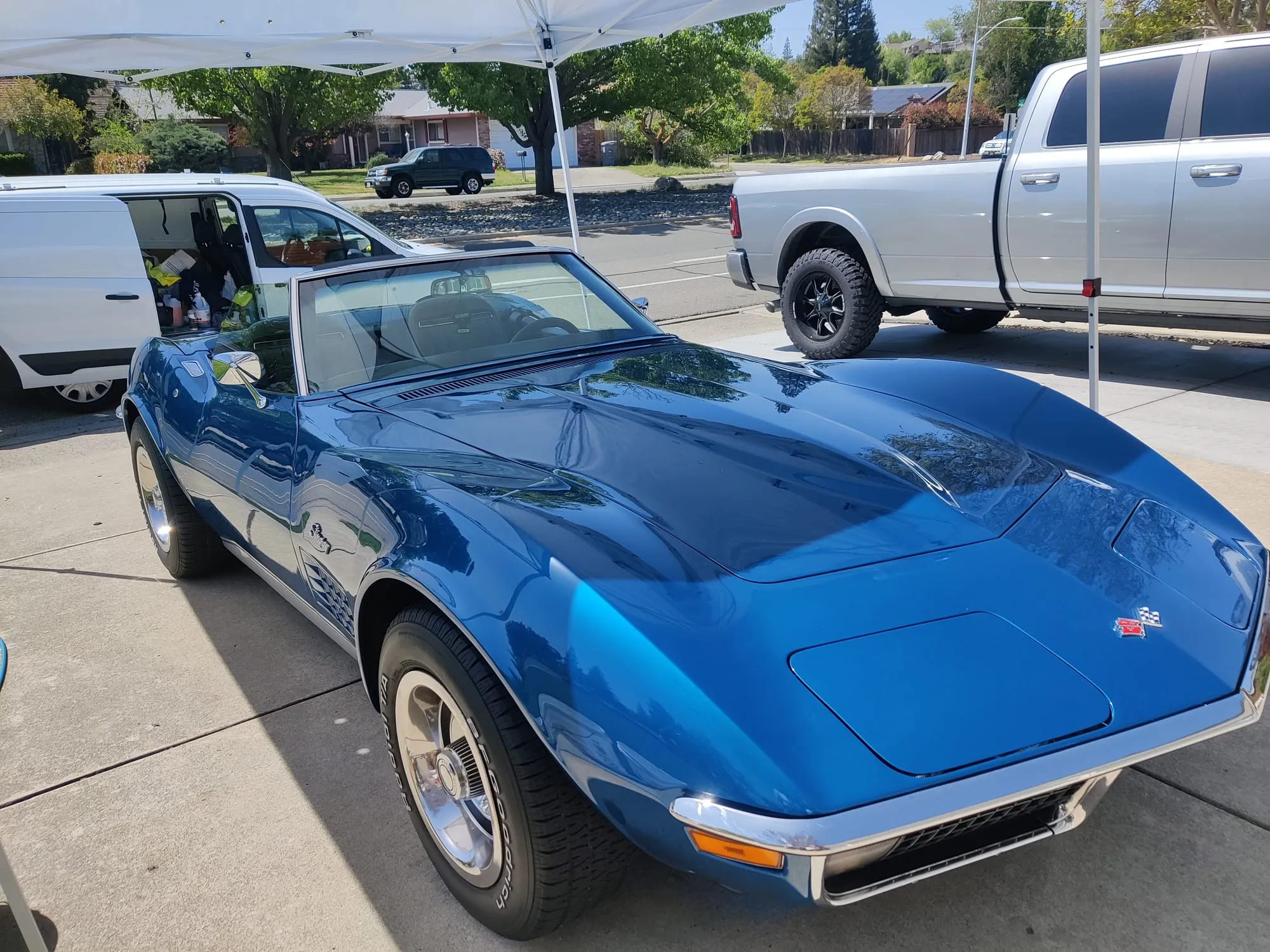
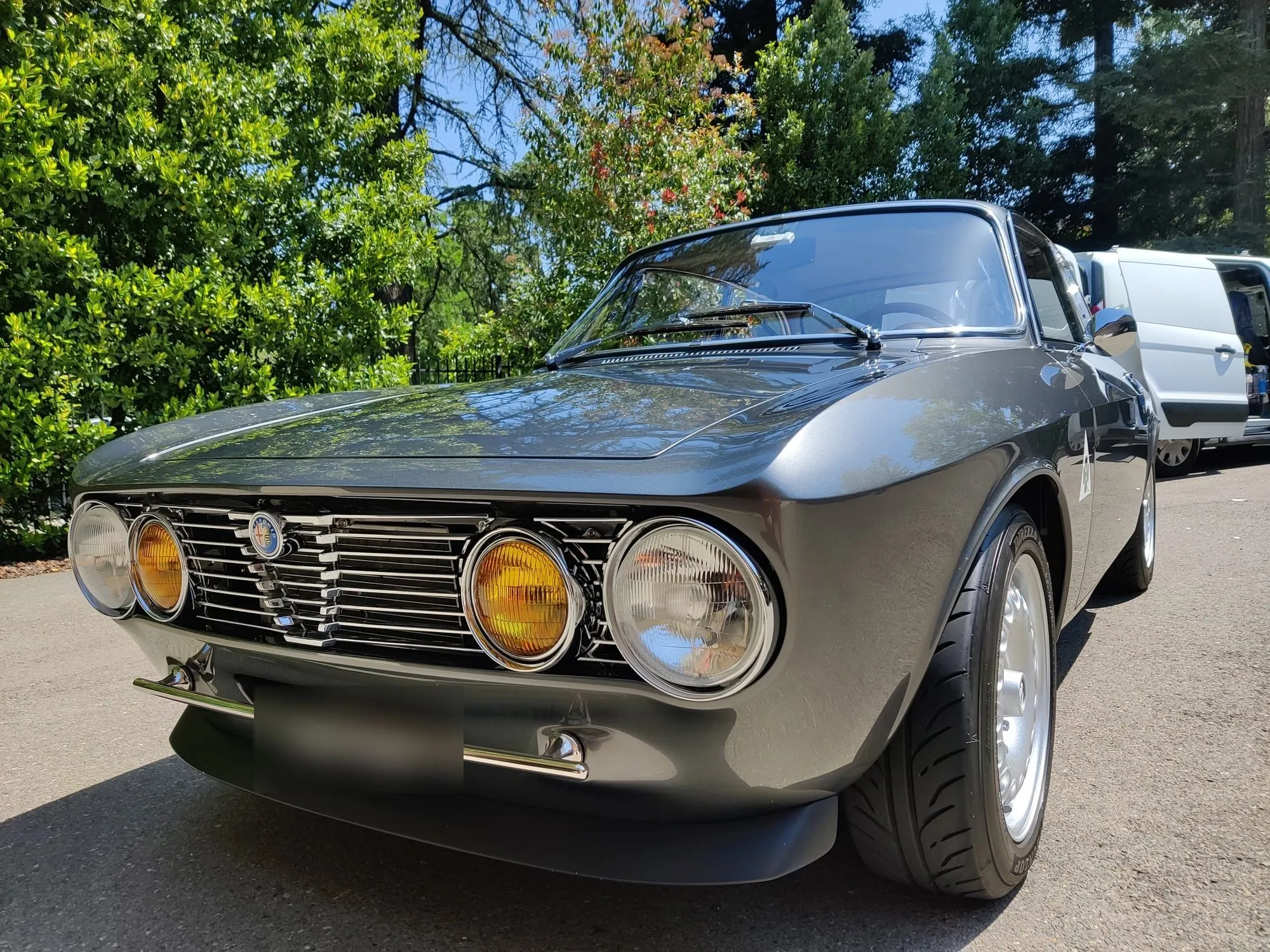
It can’t fix everything. A scratch that catches your fingernail has usually gone through the clear coat, and polishing can only make it less visible. Rock chips and peeling clear coat need paint repair, not polish. Clear coat is thin, and we only remove what we need to. We’ll tell you honestly where the limit is before we start.
Repainted panels can also behave differently from factory paint. Some are softer, some are harder, and some have a thinner clear coat. If we spot a repaint during the walk-around, we’ll adjust how we polish it and let you know.
We also measure our progress as we go, not just at the end. If a panel looks good after a lighter polish, we stop there. Keeping as much clear coat as possible matters for the life of the paint. That clear coat is what protects the color from the sun, so we treat it as something to save, not spend.
One step or more
Most cars look much better after a one-step correction: a single polish that removes most light swirls and brings back gloss. It’s included in two of our packages:
- Reshine Detail, $599: our full inside-and-out detail plus one-step correction
- Exterior Reshine, $399: exterior detail plus one-step correction and a wax buff
Cars with heavy swirls, deeper scratches or years of neglect may need a multi-step correction: a heavier cut first, then a finer polish. That takes more time, so we quote it after we see the paint in person or in good photos.
Multi-step work is often the right call for black and other dark colors, show cars, and cars that have been washed at tunnel washes for years. It can take a full day or more, and we may suggest doing it at our shop, where the light and temperature are easier to control.
Folsom sun and your clear coat
Long summers over 100°F and strong sun wear clear coat down faster. That’s why so many cars around Folsom look faded on the roof and hood first. Add sprinkler spots that bake on in the afternoon and sap from oak trees, and paint can look tired in just a few years.
Once the paint is corrected, protect it. Wax helps for a few weeks. For years of protection, a ceramic coating pairs well with correction. The coating locks in the clean, glossy finish and makes future swirls less likely.
However you protect it, how the car is washed afterward decides how long the finish lasts. Gentle hand washes with clean mitts keep the paint swirl-free. One trip through a brush wash can put many of them back. A regular maintenance visit is an easy way to keep it right.