How we remove them
We start with a full wash so we’re working on clean paint and glass. Then we test a small area to see how the spots react. Mineral deposits are treated with a product made to break them down, used carefully so it doesn’t harm trim or seals.
Glass gets the same attention. Side windows that face the sprinklers often take the worst of it, and spotted glass is hard to see through in low sun.
When we’re done, we add a layer of protection. It gives the surface a slicker finish, so new water beads up and rolls off instead of sitting and drying.
Why Folsom cars get spotted
In neighborhoods like Empire Ranch, Broadstone and Folsom Ranch, sprinklers run early in the morning and often hit cars parked in the driveway or along the curb. Then the sun comes up. On summer days over 100°F, those drops dry fast and the minerals bake on.
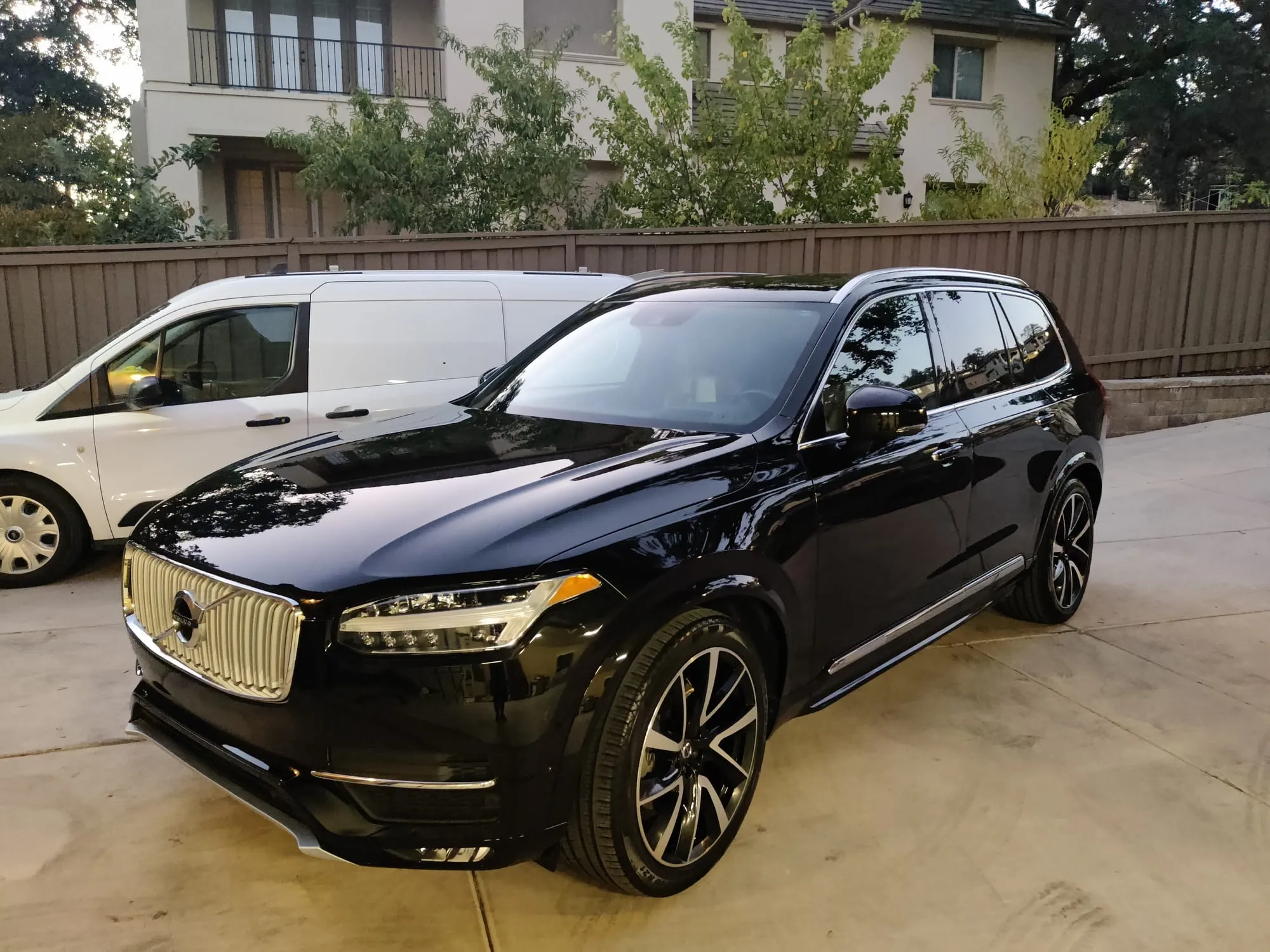
Dark cars show it the most. A black SUV that sits next to a lawn can be covered in white dots within a week. Washing in direct sun and letting the car air dry adds more spots too.
Rinsing the car at home with a hose and leaving it to dry is another common cause. Tap water in the area carries minerals too, so a quick rinse on a hot afternoon can leave a car more spotted than before.
That’s also why we bring our own filtered water to every job. Washing with filtered water helps us avoid leaving new mineral spots behind while we work.
Spots on glass
Windows can take the most abuse. Glass doesn’t have a clear coat to protect it, so minerals bond straight to the surface. Over time, the spots can turn into a cloudy film that is hard to see through when the sun is low, like on an evening drive west on Highway 50.
We clean glass inside and out, then treat the spotted areas outside with a remover made for glass. Light buildup usually clears well. Glass that has been spotted for years may improve but keep some faint marks, and we’ll point those out so you know what to expect.
Don’t scrape spots off with a razor or rough pad at home. That can scratch the glass, and scratches catch glare at night.
Pricing and when polishing is needed
Water spot removal is $100 per hour. Most cars with surface spots need about an hour. Heavier buildup, or a large SUV or truck, can take longer. We give you a time estimate after we look at the car.
Etched spots that don’t come out with removal need machine polishing. That’s quoted separately, because it depends on how deep the marks are. Our paint correction page explains how polishing works.
To keep spots away, aim your sprinklers away from the driveway, park in the garage or shade when you can, and don’t let water air dry on the car.
A ceramic coating or a regular maintenance wash makes the biggest long-term difference. Water rolls off a protected surface faster, and spots that do form are caught while they’re still easy to remove.