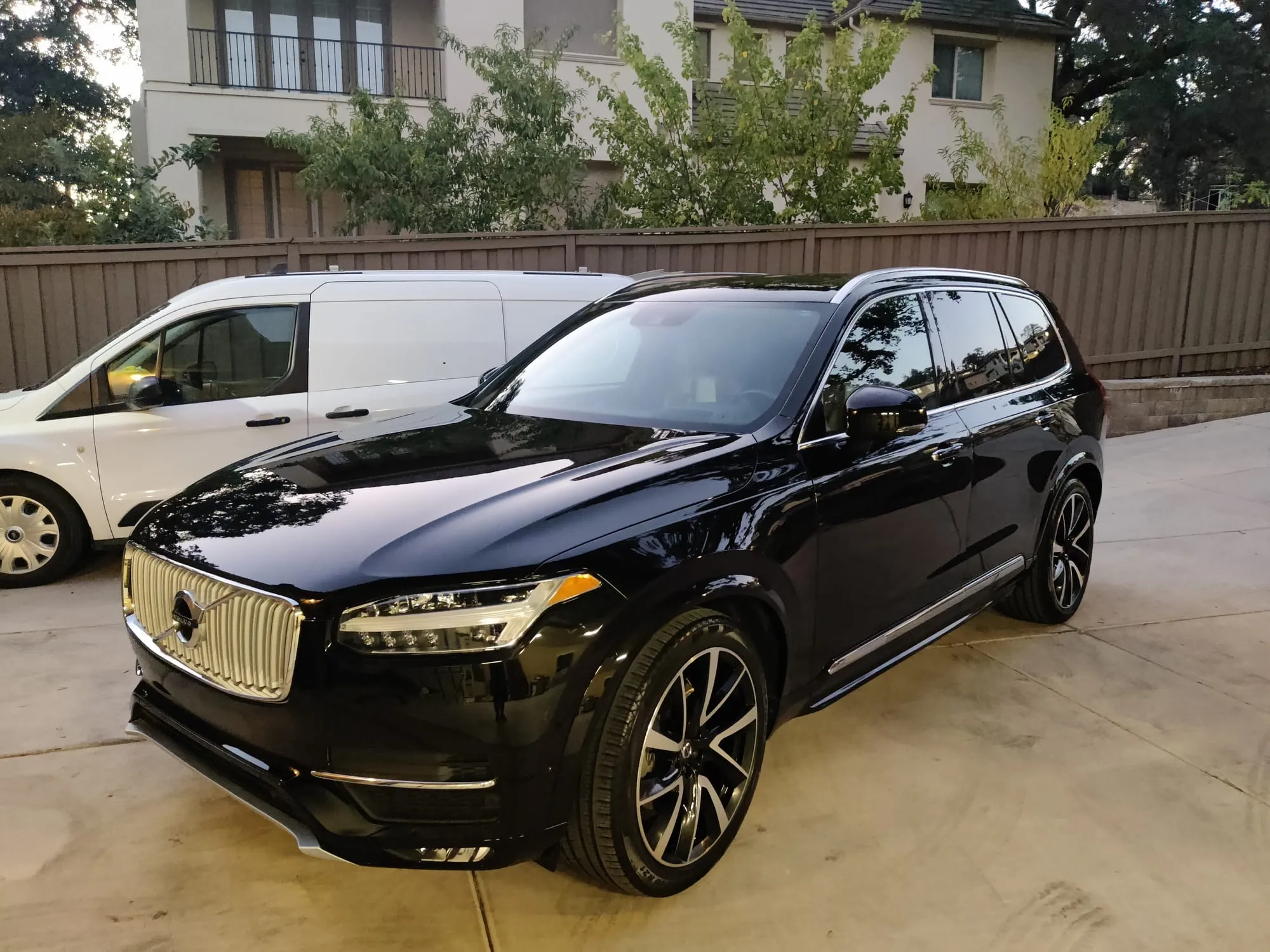
Black Volvo XC90 with spot-free paint after detailing

Sacramento  /  Water Spot Removal

Water Spot Removal
in Sacramento, CA

In Sacramento, water spots don’t only come from home sprinklers. Curbside sprinklers, a quick hose rinse at an apartment complex and rain drying on dusty paint all leave marks that summer sun bakes in. We take them off paint and glass and add protection so new spots don’t stick as easily.

Where the spots come from

A water spot is what’s left when water dries and the minerals in it stay behind. In Sacramento, cars pick them up in a few common ways:

  • Sprinklers watering the park strip next to where you parked
  • A hose rinse that dried in the sun before you could towel it off
  • Rain landing on a dusty car, then drying in a hot afternoon
  • Drips from trees and building edges after a storm
  • Car washes that leave the car to air dry

How to tell how bad they are

Spots come in three levels, and each needs a different fix. Run a clean finger over one after a wash. If it feels raised and gritty, the minerals are still sitting on top. That’s the easy kind.

If it feels smooth but you can still see a white ring, the minerals have hardened onto the clear coat. Those take more time with targeted products and clay. If you see a ring-shaped dent or dull mark even after the minerals are gone, the spot has etched into the paint. Etched marks need machine polishing to level them out.

Black Volvo XC90 with spot-free paint after detailing

Black Volvo XC90 with spot-free paint.

Our process

Five steps to clean, clear paint and glass.

Fresh spots wipe away. Sun-baked spots etch in. Don’t wait.

01

Wash

A hand wash with filtered water so we can see every spot clearly.

02

Test

We try a small area to find out if the spots are on top, bonded or etched.

03

Remove

Mineral remover and clay take deposits off paint, and a glass remover treats the windows.

04

Inspect

We check in good light and point out any etched marks that would need polishing.

05

Protect

A protective layer helps water bead up and roll off before it dries.

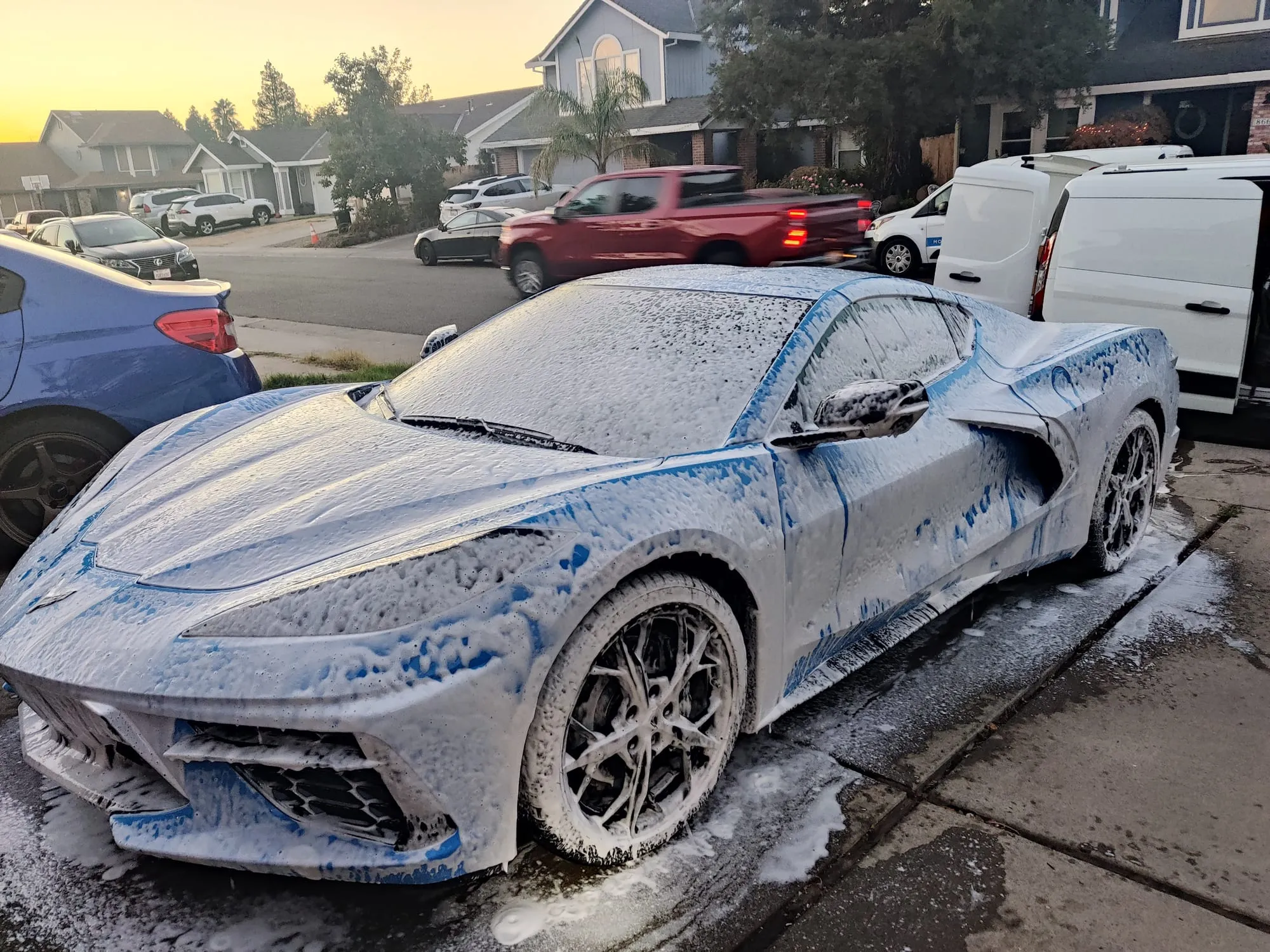
C8 Corvette in thick foam during a hand wash at the owner’s home

How we take them off

We start with a careful hand wash using our own filtered water, so we don’t add new spots while we work. Hard water from a hose would just leave a fresh set behind. Then we test a small area to see how the spots react. Mineral deposits get a remover made to break them down, used carefully around rubber seals and trim. Clay pulls off anything still bonded.

We don’t use harsh acids or scrub with rough pads. Both can do more damage to paint, glass and trim than the spots themselves.

Glass gets its own treatment. Windows have no clear coat, so minerals bond right to the surface and build into a cloudy film. Light buildup usually clears well. Glass that has been spotted for years may keep some faint marks, and we’ll point those out.

We finish with a protective layer. A slicker surface helps water bead and roll off before it has time to dry.

Why summer makes it worse

Our long, hot summers are the main reason spots go from easy to hard. A drop of sprinkler water on a black car in July can dry in minutes. Each day in the sun bonds the minerals a little tighter, and the longer they sit, the more likely they are to etch.

Street parking adds to it. Many Sacramento cars spend their nights at the curb next to watered lawns and park strips, so they get hit again and again. Dark paint shows the damage first, but light colors get spotted too.

Rain does its part in winter. Sacramento storms often come after weeks of dry, dusty weather, so the first rain lands on a dirty car. When the sun comes back out, that mix of water and dust dries into spots and streaks that are harder to remove than plain dirt.

Pricing, and when polishing is needed

Water spot removal is $100 per hour. Most cars with surface spots take about an hour. Heavy buildup, lots of spotted glass, or a big SUV or truck can take longer. We give you a time estimate after we look at the car.

If etched marks remain after removal, machine polishing is the next step, and it’s priced separately based on how deep they are. Our paint correction page explains how that works.

Keeping spots from coming back

Small changes make a big difference. When you can, park a few feet away from sprinkler heads, or ask your building when the sprinklers run. After rinsing your car, dry it with a clean microfiber towel instead of letting it air dry. Wash in the shade or early in the day, not in afternoon sun.

Protection helps most over time. Wax, a sealant or a ceramic coating makes water roll off faster, and regular washes catch new spots while they’re still easy to remove.
Pricing

Water Spot Removal prices

Water spot removal is $100 per hour; time depends on how many spots there are and the size of the vehicle, and polishing for etched spots is priced separately.

Sedan pricing. SUVs, trucks and larger vehicles are priced by size; custom jobs are quoted.

Book online

Book water spot removal in Sacramento

We come to you anywhere in Downtown, Midtown, East Sacramento, Natomas and nearby. Open 7 days, 6 AM – 11 PM.

FAQ

Water Spot Removal questions

Can all water spots be removed?

Most can. Spots that have etched into the clear coat may need machine polishing, which we quote after seeing the car.

How long does it take?

Most cars with surface spots take about an hour. Heavy buildup or larger vehicles take longer, and we tell you before we start.

Do you remove spots from the windows too?

Yes. We treat glass as well as paint. Side windows facing sprinklers are often the worst.

I park on the street. Why do the spots keep coming back?

Curbside sprinklers and park strips often hit the same car every night. Moving a few feet away and adding protection to the paint both help a lot.

Will a ceramic coating stop water spots?

It helps, because water rolls off more easily, but hard water can still spot a coated car if it dries there. Regular washing keeps it clean.

Call (916) 776-8778Book online