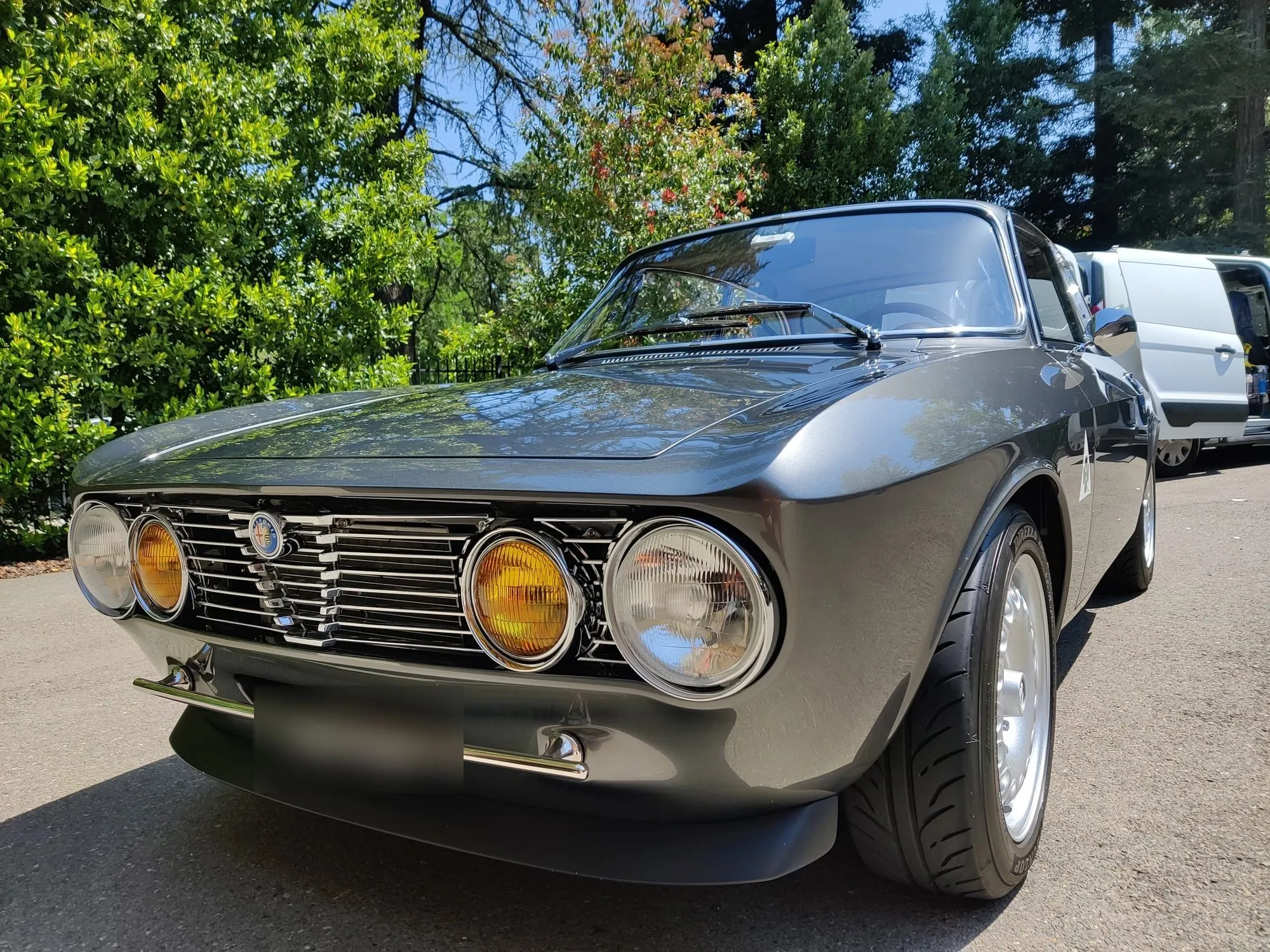
Classic Alfa Romeo GTV with restored chrome and clear headlights

South Lake Tahoe  /  Headlight Restoration

Headlight Restoration
in South Lake Tahoe, CA

Strong mountain sun and winter road sand turn headlights cloudy faster than you’d think. We sand, polish and protect the lenses so they’re clear again, as a $75 add-on to any detail in South Lake Tahoe.

Why Tahoe headlights fog up

Most headlights today are plastic with a thin protective coat from the factory. Two things wear that coat down, and Tahoe has plenty of both.

The first is UV light. At about 6,200 feet, there’s less air to filter the sun, so lenses get a stronger dose every day the car sits outside. Over time, the coat breaks down, turns hazy and then yellow, usually worst along the top of the lens.

The second is grit. Sand spread on winter roads gets kicked up by the car in front and sandblasts the front of your car. Add ice scrapers, snow brushes and quick wipes with a gritty glove, and the lens ends up covered in tiny pits and scratches that scatter light.

Clear lenses matter more in winter

Winter days are short, and a lot of driving happens in the dark, often in falling snow. Cloudy lenses let less light through and spread it in the wrong places. You see less of the road edge, and oncoming drivers can get more glare.

In a snowstorm, every bit of clean, focused light helps. Restored lenses won’t make up for driving too fast for the conditions, but they do help your headlights do their job.

The drive up the hill and back often happens after dark, too, when weekend visitors head home after a day on the snow. That’s a lot of dark, winding miles for dim, yellow lights.

Clear lenses also make a car look newer. On a well-kept SUV, yellow headlights are often the one thing that makes it look tired.

Classic Alfa Romeo GTV with restored chrome and clear headlights

Classic Alfa Romeo GTV with clear headlights and bright chrome.

Our process

Sand, polish, protect.

Short winter days and falling snow are when clear lenses count most.

01

Mask

We tape off the paint and trim so only the lens is worked on.

02

Sand off the damage

Wet sanding removes the yellow layer and smooths out sand pitting.

03

Refine

Finer sanding steps prepare the surface for polishing.

04

Polish

A machine polish brings the lens back to clear.

05

Protect

A protective layer helps slow the sun from yellowing it again.

What we do

Restoration is step-by-step work by hand and machine:

  • Masking the paint and trim around each lens
  • Wet sanding to remove the yellowed, failing outer layer and sand pitting
  • Finer sanding steps to take out the sanding marks
  • Machine polishing to bring back clarity
  • A protective layer to help shield the lens from the sun

We do it on site with the rest of your detail. In winter, we need a dry lens and a workable temperature, so a garage or a mild day works best.

Each step removes the marks left by the one before it. Skipping steps is why many quick fixes look clear for a few weeks and then go cloudy again. Taking the time to sand and polish properly, then protect the lens, is what makes the result last longer. Most cars take well under an hour, and we include the time in your visit estimate.

What it can and can’t fix

Restoration works on the outside of the lens. It removes haze, yellowing and light pitting, and most lenses come out much clearer.

It can’t fix fog or water inside the housing, which usually means a seal has failed. It can’t fix a cracked lens or a dim bulb. Deep pits from years of road sand may soften but not disappear. If a headlight needs repair or replacement, we’ll tell you before we start.

Some lenses have been treated before with a quick polish or a store-bought kit, which can leave uneven haze. We sand those back to a clean, even surface before polishing.

It also isn’t permanent. The sun and sand will keep working on the lens. Think of restoration as a reset you can repeat when the haze comes back.

Helping it last

Clear snow off the lenses with a soft brush or your gloved hand, not an ice scraper. Wash the front of the car when road sand builds up, instead of wiping it off dry. Park in a garage or out of the sun when you can.

Headlight restoration is a $75 add-on, so most people pair it with an exterior detail or a full mobile detail. That way the clear lenses match clean paint, and the front of the car looks finished.

Restoration also costs far less than new headlight assemblies, especially on newer cars with LED lights. When the only problem is a hazy outer surface, restoring makes more sense than replacing.

Pricing

Headlight Restoration prices

Headlight restoration is a $75 add-on; it covers the outside of the lenses, and cracked or water-filled headlights need repair instead.

Sedan pricing. SUVs, trucks and larger vehicles are priced by size; custom jobs are quoted.

Book online

Book headlight restoration in South Lake Tahoe

We come to you anywhere in South Lake Tahoe, Meyers, Tahoe Keys, Stateline and nearby. Open 7 days, 6 AM – 11 PM.

FAQ

Headlight Restoration questions

Can you restore headlights in winter?

Yes, when the lens is dry and the temperature is workable. A garage or a mild day is best.

How long will they stay clear?

It depends on sun and road sand. With a protective layer, gentle washing and some shade, they stay clear much longer than a quick polish alone.

Can you fix fog inside the headlight?

No. Moisture inside means a seal has failed, and that needs repair or a new headlight.

Will sand pitting come out?

Light pitting usually sands and polishes out. Deep pits may soften but not disappear completely.

Do I need to book a full detail?

It’s a $75 add-on to any detail, so you can pair it with whatever package fits your car.

Call (530) 314-8792Book online